The 2027 Infiltration Playbook: How Political Engineering Threatens the South-East’s Stability
Nigeria is not merely approaching another election cycle; it is entering a high-risk psychological and political manipulation phase. As Nigeria 2027 elections draws closer, a sudden and carefully choreographed “embrace” of the South-East by Northern political elites has emerged – one that demands serious scrutiny.
For decades, Ndigbo have been marginalized politically (Noted by the very elaborate “Igbo cannot be president”, “after Tinubu, power will return to the North”) – Let’s not be reserved, IT’S REAL. Now, at the most politically sensitive moment, we are witnessing symbolic inclusion, curated identities, and loud claims of victimhood. This is not reconciliation. It is political engineering.
Managed Inclusion: When Unity Becomes a Tool
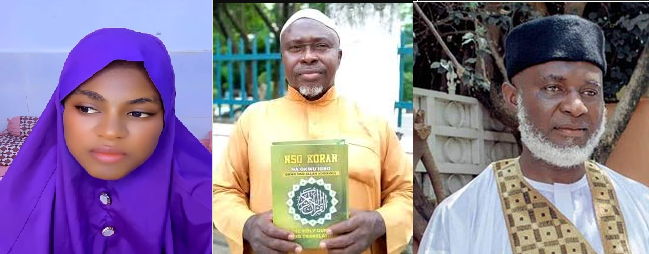
The appointment of the first Igbo Chief Imam at the Abuja National Mosque was widely framed as a milestone for national unity. On the surface, it appeared progressive. In political reality, it functions as strategic symbolism.
By inserting an Igbo figure into the apex of Northern religious authority, power brokers gain a moral foothold. This allows them to claim moral superiority over the South-East, project an image of “Northern protection” of Igbo minorities, and legitimize new political intermediaries whose loyalty lies outside the region.
This is not about religious freedom. Igbo communities have long practiced tolerance, hosting mosques and Muslim populations without conflict. What is at stake here is political validation and narrative control.
The Weaponisation of ‘sudden’ Hybrid Identity
Across media and social platforms, a new archetype has become conspicuous: Muhammed Chukwuma, Ibrahim Okafor, Nnenna Rabbiu etc.
Identity itself is not the issue. Conversion is a personal right. The danger lies in systematic political deployment, where these identities are elevated, amplified, and positioned as representatives of the South-East, often without organic grassroots legitimacy.
This strategy works by diluting the Igbo political voice through manufactured internal divisions, occupying South-East political slots with actors aligned to external power centres, and provoking social friction in the hope that one reckless, viral incident will be enough to redefine the region as religiously intolerant. The goal is not mass conversion; it is optics.
Manufacturing Persecution: The Narrative Before the Crisis
Certain advocacy groups, like the notorious MURIC, have begun alleging widespread attacks on “Igbo Muslims” in the South-East, claims repeatedly circulated without verifiable evidence of systemic violence.
This is not accidental. It follows a familiar pattern in political conflicts. Establish a persecution narrative early, export it to a wide and probable international audiences and human-rights platforms, and retain it as moral justification for future political or physical retaliation.
History shows that violence is often preceded by stories, not facts. Once a narrative hardens, facts struggle to catch up.
The Provocation Strategy: Igbos Your Reaction Is the Real Target
The centre of gravity in this entire operation is not ideology, religion, or inclusion. It is reaction. Every other element, symbolic appointments, identity amplification, persecution claims, exists solely to manufacture a response.
Provocation is not accidental. It is calibrated. The strategy depends on small, persistent irritants designed to exhaust patience and eventually trigger confrontation. The planners do not need widespread unrest; they need a single, visually compelling incident (Note that MURIC is already banking on a non-existent ‘victimhood’ narrative). One confrontation recorded on a phone. One mosque vandalised. One social media comment. One heated exchange that can be edited, stripped of context, and replayed endlessly.
Once that happens, the narrative locks in. The South-East is no longer debating politics; it is defending its humanity. Security deployments become justified. Surveillance intensifies. Collective suspicion replaces individual accountability. What was once a political disagreement is reclassified as a “security problem.”
This is why emotional response is not merely risky, it is outright catastrophic. The moment outrage takes physical or verbal form, agency is surrendered. The script changes hands. Those who engineered the provocation become the arbiters of truth, while the southeast region is forced into permanent defence mode – this most not be allowed to take hold.
History is clear on this point: communities are not destroyed first by force, but by reaction. The trap is sprung the moment anger overrides calculation.
Why This Matters Beyond 2027
To interpret this solely through the lens of the Nigeria 2027 elections is to underestimate the ambition of the project. Elections end. Narratives do not.
What is being constructed is a long-term justification framework, one that can be activated repeatedly. Once a region is successfully branded as volatile, intolerant, or extremist-adjacent, that label becomes a renewable resource of propaganda. It can be invoked to rationalise economic exclusion, security occupation, political marginalisation, and even selective law enforcement for decades (We can take the endless IPOB narratives as a cue).
This also has external consequences. International actors do not conduct deep ethnographic analysis. They respond to dominant narratives. A single successful reframing of the South-East as a conflict-prone zone (especially on religious grounds) alters foreign investment decisions, humanitarian engagement, and diplomatic sympathy. The cost can be generational.
Internally, the danger is even greater. Sustained provocation fractures trust within communities. Neighbours begin to self-censor. Religious and cultural fault lines harden. The social cohesion that once made the South-East resilient becomes brittle.
This is how regions are slowly neutralised (From within, like the Northern Nigeria suffers currently ), not always through invasions, but through reputational corrosion and internal fragmentation. By the time the damage is visible, reversal is nearly impossible.
The Verdict: Discernment Is Power
There is nothing spontaneous about the sudden affection being shown to Ndigbo by entrenched power interests. It is not repentance. It is not enlightenment. It is tactical engagement with a clear expiry date.
Discernment, therefore, is not optional. It is the ONLY way forward. It is survival. Every outrage must be interrogated before it is amplified. Every narrative must be examined for who benefits from its spread. Silence, in certain moments, is not weakness, it is denial of oxygen to a fire deliberately lit.
The most disciplined response is refusal. Refusal to be baited. Refusal to validate false frames. Refusal to supply the imagery, language, or incidents required to complete the story being written about the region.
Power is not only exercised in action. It is exercised in restraint, in patience, and in strategic denial. Those who understand this remain actors in history. Those who do not become exhibits in someone else’s case file.
The invader’s greatest advantage is not force.
It is your loss of control.
And once control is lost, everything else follows. Wisdom (restraint in this case) is profitable to direct
Ndi Igbo, it is your son, Chinedu I. Nwoke and I leave you with this.
Read More: www.curiouscity.ng/bola-tinubu-drug-history
Read More: www.padi.ng